
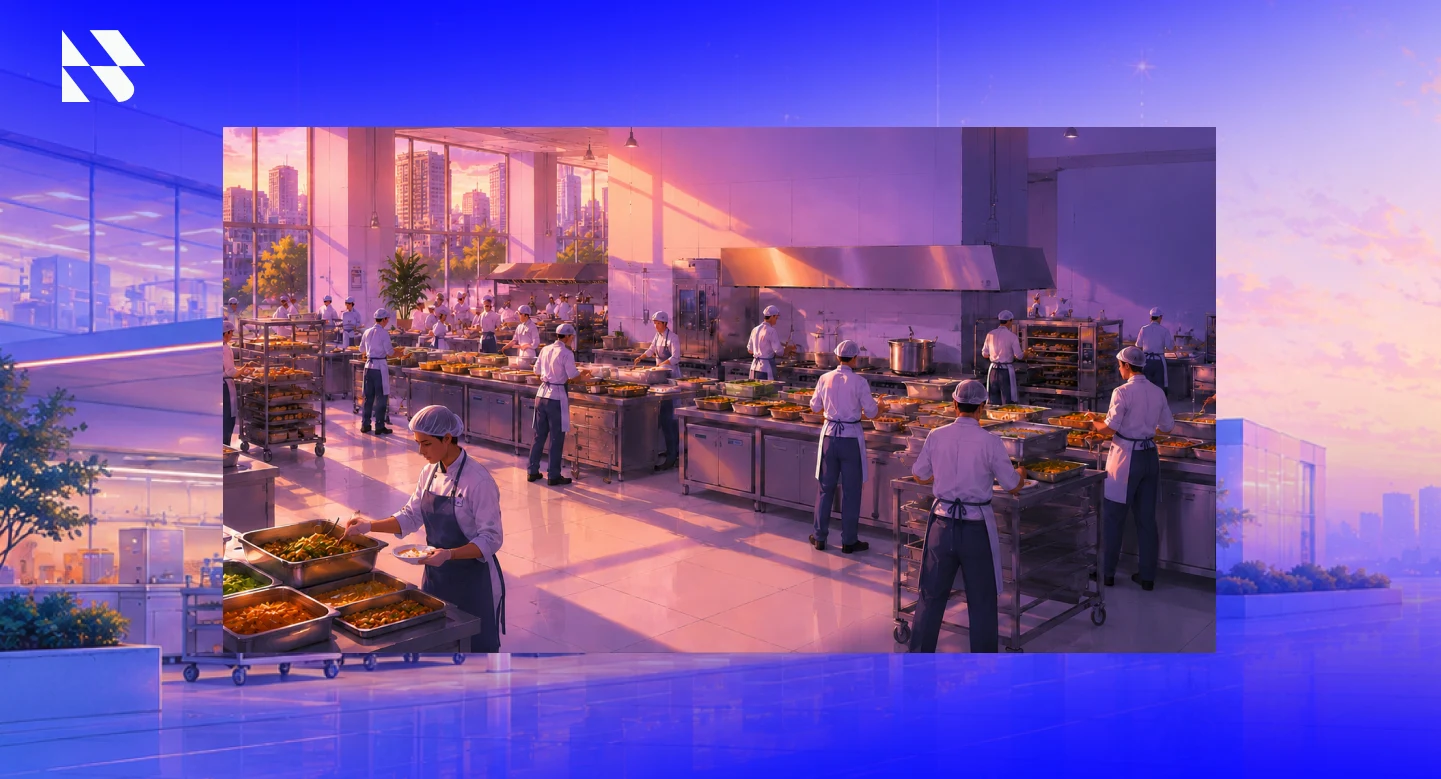
Providing meals for thousands of individuals daily requires a highly calculated operational framework. In a commercial environment, food management is no longer viewed as a simple utility. Large enterprise office spaces, expansive university campuses, specialized healthcare facilities, and heavy manufacturing plants require structured systems to keep their workforces healthy, satisfied, and highly productive.
Institutional catering services in India refer to the structured, large-scale preparation and delivery of daily meals within controlled corporate, educational, medical, or industrial environments. Unlike commercial restaurant catering, which focuses on occasional events, institutional food management operates on fixed daily schedules, rrequires strict nutritional balance, and demands high volume replication while keeping quality and hygiene consistent.
The B2B market for institutional food services is undergoing a major shift. Major global service players manage millions of square feet across the country by bundling food with integrated facility management (IFM). For admin heads, HR leaders, and procurement directors, outsourcing canteen management to an experienced partner is a strategic step to manage operational risks, control supply expenses, and elevate daily workplace hospitality.
Why Scale Makes Institutional Food Management Complex
Preparing 50 meals in a restaurant kitchen is a matter of culinary skill. Preparing 5,000 meals simultaneously for a single corporate shift requires advanced industrial engineering, strict supply chain tracking, and precise thermal control. Managing food services at scale introduces unique operational challenges that standard catering vendors cannot handle.
- Menu Fatigue: Serving the same dishes too often lowers employee satisfaction. Institutional menus require systematic rotation, balancing regional Indian palates, seasonal ingredients, and diverse nutritional needs over a 30-day calendar cycle.
- Complex Supply Chains: Procurement at scale demands complete tracking of raw materials. Sourcing thousands of kilograms of fresh produce, poultry, and grains daily requires trusted vendor networks to prevent inventory shortages or food price inflation.
- Perishable Waste Control: Institutional kitchens must manage variable footfall caused by hybrid work routines or shifting academic calendars. Advanced forecasting tools are necessary to prevent overproduction and control raw food waste.
- Thermal Logistics: For central kitchen models, keeping food within safe temperature zones during transport is critical. Hot food must stay above 65 degrees Celsius, and cold food must stay below 5 degrees Celsius to stop microbial growth.
The Operational Split: Institutional Catering vs Regular Catering
To manage food successfully at an enterprise level, it is essential to recognize how institutional food management separates itself entirely from standard event catering. Regular event catering is inherently ad-hoc, focusing on single, celebratory events with highly customized requests, premium pricing, and rich, heavy menus designed for presentation rather than daily health.
Institutional catering operations operate on a completely opposite model. They run continuously throughout the year, driven by fixed, recurring daily shift cycles that require maximum consistency. The culinary philosophy focuses entirely on long-term wellness, balanced macronutrients, and digestive comfort to support daily workforce energy.
Furthermore, the infrastructure and compliance requirements differ drastically. Event caterers work out of temporary, mobile setups with basic municipal health clearances. Institutional food operations require fixed, industrial kitchen environments equipped with heavy-duty combi-ovens and automated production lines. These facilities operate under long-term service level agreements and must maintain strict, continuous statutory compliance profiles.
Sector Contexts: Five Distinct Institutional Requirements
Every environment has its own operational rhythm, shift pressures, and nutritional requirements. A professional food services partner designs specialized programs to match the precise purpose of the space.
1. Corporate Spaces: Navya Program
Modern corporate office environments and Global Capability Centers (GCCs) demand sophisticated dining options to attract a hybrid workforce back to the desk. Through specialized frameworks like the Navya program, corporate food and dining services focus shifts toward global cuisines, light lunches, and gut-friendly preparations.
The menu philosophy centers on providing light, nutrition-packed meals that sustain mental focus and prevent afternoon sluggishness. This is achieved by reducing heavy oils and processed carbohydrates while prioritizing fresh salads, live cooking counters, and artisanal café integration.
2. Healthcare Settings: Shakti Program
Hospital food services India demands exact medical precision and absolute sterile control. Through specialized hospital and patient nutrition programs programs like shakti, food management functions directly as a component of patient care and recovery.
Menus are curated with strict medical sensitivity, accommodating low-sodium, diabetic, renal, or post-operative liquid diets based on direct physician directives. Kitchen environments for patient food must maintain complete separation between general cafeteria cooking and therapeutic diets to prevent ingredient cross-contamination.
3. Educational Institutions: Neev Program
Campus dining management India focuses heavily on child development, student health, and home-style comfort. For schools, universities, and hostels, school and campus dining services like Neev deliver nutritionally balanced, comforting meals that support active academic and sports routines.
These programs place an absolute ban on artificial preservatives, hydrogenated fats, and chemical colorings. Instead, menus prioritize regional preferences, seasonal fruits, and essential macronutrients served in high-volume, highly hygienic student dining halls.
4. Industrial Plants: Oorja Program
Manufacturing units, automobile plants, and heavy industrial environments require high-sustenance food models to fuel intense physical labor. The Oorja, industrial workforce food program targets these high-demand sectors by offering high-calorie, traditional, and shift-ready food options.
Industrial catering requires operating across continuous 24/7 rotating shifts, ensuring that employees on a 2 AM night shift receive the exact same temperature, freshness, and portion sizes as those on the main day shift.
5. Government & Public Sector: Utkarsh Program
Public sector undertakings (PSUs), administrative headquarters, and government institutions require traditional, dignified, and highly dependable food setups. Under the Utkarsh framework, government and public sector catering models focus heavily on authentic regional Indian food lines executed with high efficiency.
These setups operate under strict regulatory compliance frameworks, ensuring accessible, high-quality daily meals for large public departments and visiting stakeholders.
Food Safety, FSSAI Compliance, and Kitchen Standards
When serving thousands of meals every day, food safety is a major operational risk. A single instance of contamination can compromise workforce health and halt corporate operations. Professional institutional catering operators establish rigid, multilayered quality control protocols across their entire production chain.
Mandatory FSSAI Compliance
FSSAI compliance is mandatory for all institutional food service operations in India. Leading caterers ensure that every production unit holds a valid central FSSAI license and participates in the Food Safety Training and Certification (FoSTaC) program. This requires maintaining on-site certified food safety supervisors who monitor incoming raw material parameters, kitchen hygiene, and final food storage temperatures daily.
ISO-Certified Kitchen Infrastructures
World-class institutional kitchens are constructed to follow strict international hygiene standards, including ISO 22000 (Food Safety Management Systems) and Hazard Analysis Critical Control Point (HACCP) principles.
Key design and operational requirements include:
- Linear Flow Layouts: Designing the kitchen layout in a strict straight line from raw material receiving, through processing and cooking, to final dispatch. This physical separation ensures that unwashed raw vegetables or raw meats never cross paths with finished, cooked dishes.
- Advanced Water Filtration: Installing industrial reverse osmosis (RO) purification plants to ensure that all water used for cooking, washing ingredients, and cleaning utensils meets strict drinking water standards.
- Routine Medical Examinations: Conducting mandatory bi-annual medical tests, including vaccinations and skin checks, for all chefs, service staff, and dishwashing crews to guarantee they are completely fit for food handling duties.
- Traceable Ingredient Sourcing: Maintaining complete batch records for all spices, oils, dairy products, and dry rations to enable immediate origin tracking during internal quality audits.
How Bluspring Delivers Institutional Catering at National Scale
Managing large-scale corporate and industrial dining requirements demands an enterprise-grade infrastructure. Bluspring has built one of the most advanced food and hospitality architectures in the country, delivering institutional catering services India can rely on for absolute consistency and safety.
Operating through its specialized food engine, Indya Foods, Bluspring manages large-scale catering operations with institutional precision.
300,000+ Daily Meals
Bluspring prepares and serves more than 300,000 meals per day across diverse institutional settings in India. This massive operational volume is supported by a mix of on-site corporate kitchens and highly efficient regional central kitchens.
This infrastructure enables the business to handle high-volume demands effortlessly, supporting large multi-national campus setups, manufacturing hubs, and public sector networks without compromising on taste, freshness, or hygiene.
Sector-Specific Brand Architecture
Bluspring does not apply a generic solution to diverse catering needs. It uses its dedicated brand framework to serve each sector accurately:
- Navya: Tailored for corporate office environments, focusing on light, global, and gut-friendly options.
- Shakti: Configured specifically for healthcare settings, prioritizing patient diet precision and strict hygiene.
- Neev: Structured for educational institutions, delivering clean, home-style nutrition for students.
- Oorja: Designed for industrial and plant operations, offering high-energy, shift-ready menus.
- Utkarsh: Focused on government and public sector institutions, serving authentic regional cuisines reliably.
Technology-Enabled Kitchen Audits
To maintain strict compliance and quality standards across thousands of daily meals, Bluspring replaces manual checklists with automated tracking tools. Kitchen parameters, including cold-storage temperatures, utensil sanitization cycles, and staff hygiene metrics, are logged digitally. This real-time data flow gives facility managers complete visibility and peace of mind regarding compliance across all operating locations.
Frequently Asked Questions (FAQ)
What is the core difference between institutional catering and regular catering?
Institutional catering focuses on providing daily, nutritionally balanced meals on a recurring contract basis within corporate, industrial, or educational campuses. Regular catering handles occasional, single events where the focus is on celebratory menus, heavy styling, and premium presentation.
How do modern providers avoid menu fatigue in corporate cafeterias?
Providers manage menu fatigue by using digital menu planning systems that rotate food options over a 30-day cycle. By incorporating regional Indian cuisines, healthy international choices, and seasonal specials, they keep daily options fresh and engaging for employees.
Why is FSSAI compliance critical for outsourced corporate canteens?
FSSAI compliance is a statutory mandate under Indian law. It guarantees that the food provider follows verified safety guidelines regarding raw material tracking, clean kitchen infrastructure, purified water standards, and trained food handling teams, protecting the corporate buyer from legal and health risks.
What are the temperature safety rules for transporting food from central kitchens?
To stop bacteria from growing, cooked food must be moved in insulated thermal containers. Hot food lines must be kept at or above 65 degrees Celsius, while cold salad and dairy items must be transported and held below 5 degrees Celsius until served.
Can an integrated facility management partner manage food services?
Yes. Partnering with an integrated infrastructure services provider like Bluspring allows companies to bundle their corporate food services with their broader facility operations. This simplifies vendor management, unifies compliance tracking, and lowers overall operational overhead.
Engineer better food experiences with Bluspring
Transform your institutional dining from a standard utility into a strategic employee experience. Provide your teams with fresh, compliant, and sector-specific meals managed by India’s leading large-scale catering operational network.