
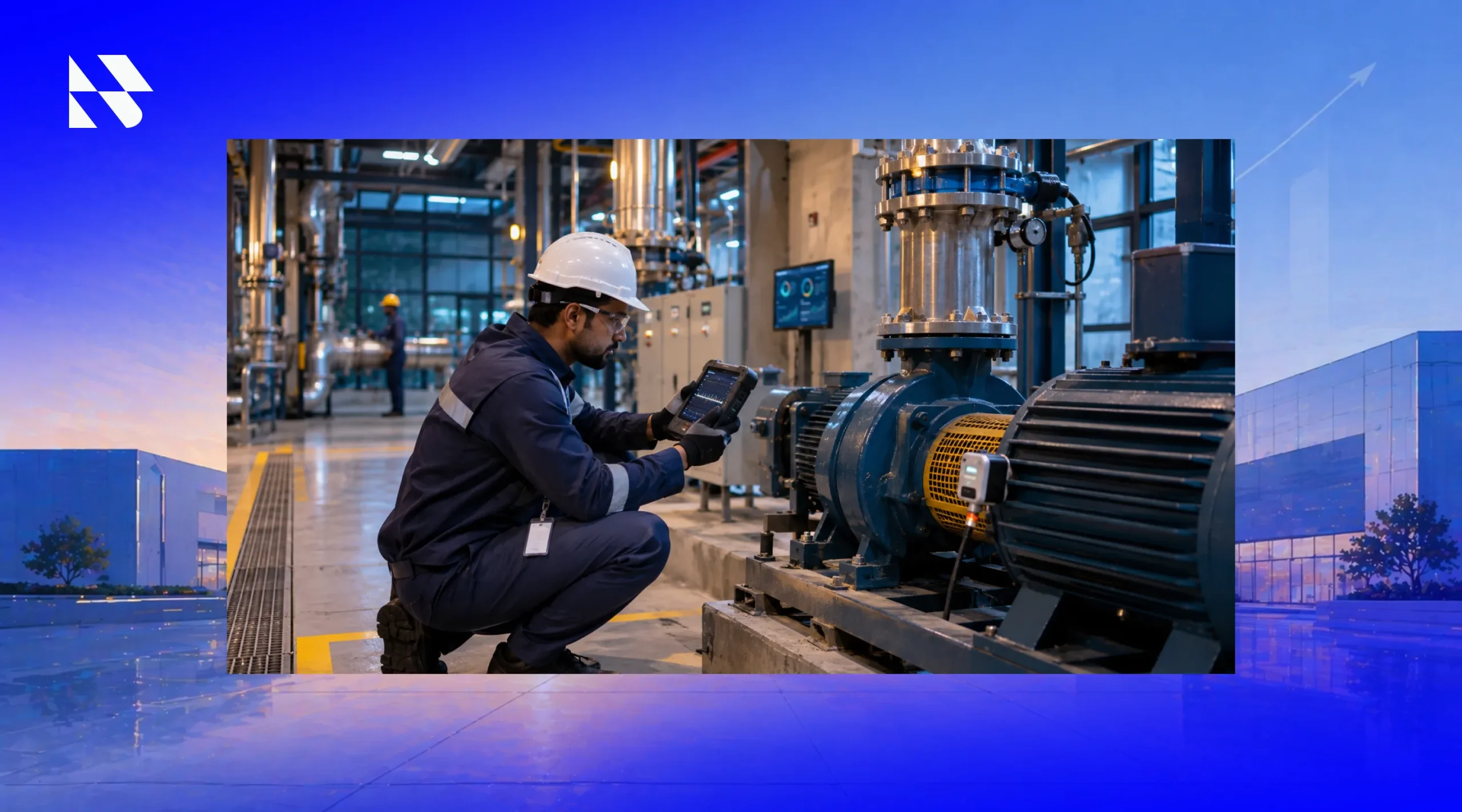
How Predictive Maintenance Reduces Downtime in Facilities
A building depends on several systems working together to support everyday operations. HVAC equipment maintains indoor comfort, electrical infrastructure supplies power, pumps support water circulation, and other mechanical systems keep essential services running.
When one of these systems develops a fault, the consequences can extend beyond the equipment itself. An HVAC breakdown can affect workplace comfort. A pump failure can interrupt water supply. An electrical fault can disrupt essential services across an entire building.
For facility management teams, the challenge is not simply restoring a system after it fails. It is identifying potential problems early enough to plan maintenance before they become operational disruptions.
This is where predictive maintenance reduces downtime. By using equipment condition information, operational data and maintenance expertise, facility teams can identify developing issues, prioritise critical assets and plan interventions more effectively.
At Bluspring, we see predictive maintenance as an important part of the evolution of integrated facility management. It supports a shift from maintenance that responds mainly to breakdowns towards more informed, proactive management of building systems.
Make Predictive Maintenance Part of Your Facility Strategy
Explore how Bluspring can support more reliable building operations through integrated facility management.
What Is Predictive Maintenance in Facility Management?
Predictive maintenance is an approach to equipment maintenance that uses information about an asset’s condition and performance to identify when it may require attention.
Rather than relying only on fixed maintenance schedules or waiting for a breakdown, facility teams monitor equipment performance for changes that could indicate deterioration or an emerging fault.
In a commercial building, for example, an air handling unit may begin operating with an abnormal pressure difference across its filters. A pump may show changes in vibration or temperature. A chiller may consume more energy than expected under comparable operating conditions.
These changes do not necessarily mean that equipment is about to fail. However, they can indicate that further inspection or corrective action is required.
Predictive maintenance uses such information to help teams investigate potential problems and determine when intervention is appropriate.
In facility management, it can be relevant to several building systems, including:
- HVAC systems: Chillers, cooling towers, air handling units, ventilation equipment and associated components.
- Electrical infrastructure: Transformers, distribution panels, switchgear and other critical electrical equipment.
- Water systems: Pumps, motors, filtration systems and water circulation equipment.
- Vertical transportation: Lifts and escalators, where equipment condition information and specialist maintenance inputs are available.
- Building controls: Sensors, controllers and other components that influence how building systems operate.
The objective is to understand how critical building assets are performing and identify potential issues before they affect facility operations.
Predictive vs. Preventive vs. Reactive Maintenance
Predictive maintenance is one part of a broader facility maintenance strategy. It works alongside preventive and reactive maintenance, with each approach serving a different purpose.
| Maintenance approach | How it works | Role in facility management |
|---|---|---|
| Reactive maintenance | Repairs are undertaken after a fault or breakdown occurs | Restores affected services and equipment |
| Preventive maintenance | Inspections, servicing and replacements follow predetermined schedules or usage intervals | Helps maintain equipment and reduce the likelihood of failures |
| Predictive maintenance | Equipment condition and performance information guide maintenance decisions | Helps identify developing issues and plan interventions before failure |
Reactive maintenance is sometimes unavoidable. Certain faults are difficult to anticipate, and not every building component justifies continuous monitoring. However, relying heavily on breakdown-based maintenance can lead to service interruptions, emergency repairs, and disruption for building occupants.
Preventive maintenance provides a planned approach. Facility teams schedule activities such as filter replacement, electrical inspections, pump servicing, and equipment checks according to manufacturer recommendations, operating hours, or site requirements.
Predictive maintenance adds condition-based information to these decisions. Instead of depending entirely on a calendar, teams can use equipment performance trends to determine whether an asset needs closer inspection or intervention.
These approaches are not mutually exclusive. A well-managed facility uses preventive maintenance for routine requirements, predictive techniques where monitoring is practical and valuable, and reactive maintenance when unexpected faults occur.
How Predictive Maintenance Works in Building Operations
Predictive maintenance depends on more than installing sensors or collecting equipment readings. Facility teams need reliable information, an understanding of normal operating conditions, and a process for responding when something changes.
Three elements are particularly important.
1. Monitoring Building Equipment and Systems
The first step is identifying which assets need closer monitoring and what information can indicate a change in their condition.
Depending on the equipment, monitoring may involve sensors, building management systems, connected devices, and specialist inspection techniques.
For example:
- Temperature readings can help identify abnormal heating in electrical equipment or mechanical components.
- Vibration measurements can indicate potential issues in pumps, motors, and other rotating equipment.
- Pressure readings can help assess the performance of water systems, filters, and HVAC equipment.
- Energy consumption trends can highlight changes in how building systems operate.
- Equipment operating hours can help teams understand usage patterns and maintenance requirements.
The monitoring method depends on the asset, its criticality, and the type of fault that needs to be identified.
A central chiller serving a large commercial building may justify more detailed condition monitoring than a low-impact component that can be inspected during routine maintenance. The aim is to focus monitoring resources where an equipment failure could create significant operational consequences.
2. Analysing Equipment Performance and Identifying Changes
Once equipment information is available, facility teams can compare current operating conditions with expected performance and historical trends.
Building management systems and energy management platforms can help bring together information from connected building equipment. More advanced analytics and automated fault detection tools can identify deviations from expected operating conditions and help maintenance teams investigate them.
Consider an HVAC system on a corporate campus. If the system begins consuming more energy while delivering the same level of cooling, the change may indicate an operating inefficiency. Possible causes could include filter restrictions, control issues, equipment deterioration, or changes in operating conditions.
The data alone may not identify the exact cause. Technicians still need to inspect the system, interpret the findings, and determine the appropriate corrective action.
This is why predictive maintenance requires both technology and facility engineering expertise. Monitoring can highlight where attention is needed, but sound maintenance decisions depend on understanding the equipment and the environment in which it operates.
3. Planning Maintenance Before Service Disruption
The final step is translating monitoring insights into maintenance action.
When a potential issue is identified, the facility team can assess its severity, inspect the equipment, and decide whether corrective work is required. If intervention is necessary, the team can coordinate technicians, spare parts, access requirements, and maintenance schedules.
For example, if an HVAC component shows signs of deteriorating performance, the team can investigate the issue and plan the required work during a suitable maintenance window. This may help avoid an unexpected loss of cooling during peak building occupancy.
The benefit is greater control over when and how maintenance takes place.
However, an alert does not prevent a breakdown on its own. The effectiveness of predictive maintenance depends on the quality of the information, the accuracy of the assessment, and how quickly the maintenance team responds.
How Predictive Maintenance Reduces Downtime in Facilities
For facility managers, downtime is not limited to equipment being out of service. It can affect the availability of building services, occupant experience, workplace productivity, and the ability to maintain normal operations.
Predictive maintenance can help address these risks in several ways.
1. Identifying Building System Issues Earlier
Some equipment faults develop gradually. Changes in vibration, temperature, pressure, or energy consumption may indicate that a component is no longer operating as expected.
Monitoring these parameters can help facility teams identify abnormalities before they result in a complete equipment failure.
For example, an air handling unit showing a developing performance issue can be inspected before the problem affects ventilation or indoor comfort. Similarly, unusual pump readings can prompt an investigation before water circulation is interrupted.
Early identification gives teams an opportunity to assess the issue and decide on the appropriate intervention.
2. Maintaining the Availability of Critical Services
Many building systems support services that occupants depend on throughout the day.
In an office campus, HVAC and electrical systems influence workplace comfort and business continuity. In a hospital, reliable building services are particularly important because interruptions can affect critical areas and support functions. In an educational campus, failures involving water supply, ventilation or electrical infrastructure can disrupt daily activities.
Predictive maintenance helps facility teams give greater attention to assets where failure could have wider consequences.
By identifying potential equipment problems and planning corrective work, teams can reduce the likelihood of avoidable service interruptions. It cannot eliminate every breakdown, but it can improve preparedness for issues that show detectable warning signs.
3. Reducing Unplanned Maintenance and Emergency Repairs
When equipment fails unexpectedly, facility teams may have to arrange urgent inspections, mobilise technicians, source replacement components and coordinate repairs at short notice.
These activities can disrupt planned maintenance schedules and place additional pressure on site operations.
Predictive maintenance can provide earlier indications of equipment deterioration, allowing teams to investigate and prepare for corrective work.
This can support better coordination of maintenance personnel, spare parts, and access arrangements. It also gives facility managers greater flexibility to schedule work around occupancy patterns and operational requirements.
4. Supporting Energy-Efficient Building Operations
Equipment that is not operating as intended may consume more energy or deliver lower performance.
For example, an HVAC system with restricted filters, faulty sensors, or poorly functioning controls may require more energy to maintain the desired indoor conditions. Changes in pump performance or operating pressure can also indicate inefficiencies that need investigation.
By reviewing equipment performance and energy consumption trends, facility teams can identify potential issues and assess whether maintenance or operational adjustments are required.
This connects maintenance planning with energy management. The objective is not simply to keep equipment running, but to maintain its performance while supporting the facility’s energy and operational requirements.
5. Improving Maintenance Planning and Asset Life-Cycle Decisions
A consistent view of equipment condition helps facility managers make more informed decisions about maintenance priorities.
Recurring faults may indicate that a system needs closer inspection, more frequent servicing or a change in operating practices. Persistent performance deterioration may also prompt an assessment of whether repair or replacement is more appropriate.
These decisions become particularly important in facilities with large numbers of assets and different maintenance requirements.
Predictive maintenance can therefore contribute to more structured asset planning. It does not guarantee longer equipment life, but it can help teams identify deterioration earlier and make decisions based on better information.
What Does the Evidence Say About Predictive Maintenance in Buildings?
Research into building operations supports the use of equipment monitoring and automated fault detection to improve maintenance decisions.
The US Department of Energy’s Federal Energy Management Program explains how energy management information systems can use automated fault detection and diagnostics to identify deviations in building equipment. Its examples include monitoring pressure differences across air handling unit filters and temperature differences across heat exchangers to help determine when maintenance is required.
In India, the Bureau of Energy Efficiency (BEE) promotes energy efficiency across commercial buildings through initiatives focused on improving building energy performance. Its work, alongside programmes such as the National Energy Efficient Buildings Programme led by Energy Efficiency Services Limited (EESL), highlights the importance of monitoring building systems and using operational data to identify opportunities for better energy performance. For facility management teams, this reinforces the value of tracking HVAC performance, electricity consumption, and other critical building parameters to identify operational inefficiencies and determine when maintenance or corrective action may be necessary.
The approach is particularly relevant to HVAC and other mechanical systems, where performance changes may not be immediately visible during routine inspections.
The ASHRAE Handbook also describes predictive maintenance as a strategy that uses equipment condition and performance measurements to guide maintenance activities. It identifies potential benefits such as reducing unplanned downtime, improving troubleshooting, and supporting more informed maintenance planning.
These findings reinforce an important point: predictive maintenance is not a single technology or a guaranteed reduction in downtime. Its effectiveness depends on the assets being monitored, the quality of the data, the maintenance team’s ability to interpret findings, and the organisation’s response process.
For facility managers, the practical starting point is to identify which building systems are most critical, understand how their performance can be assessed, and establish a process for acting on potential warning signs.
How Bluspring Approaches Technology-Enabled Facility Operations
At Bluspring, we approach integrated facility management with a focus on reliable building operations, coordinated service delivery, and technology-enabled oversight.
We understand that a corporate campus, commercial building, healthcare facility, and educational institution have different operating priorities. The systems that require attention, the consequences of service interruptions, and the maintenance requirements can vary considerably between sites.
Our approach begins with understanding these requirements and aligning facility services with the needs of each environment.
Through our Technical/MEP services, we support the maintenance and operation of essential building systems, including electrical, mechanical, and HVAC infrastructure. We also bring together soft services, security support, pest control, landscaping, energy and sustainability solutions, and other facility services as part of our integrated approach.
Technology supports how we coordinate and oversee these activities. Our Smart Operations platform provides Bluspring IFM teams with real-time visibility into facility activities, supporting operational coordination, oversight, and informed decision-making.
This visibility is important when managing facilities with multiple service requirements. Teams need to understand what is happening across the site, track operational activities, and coordinate responses when an issue requires attention.
Predictive maintenance and asset condition monitoring represent an important direction for the wider facility management industry. We see value in connecting equipment performance information with maintenance planning and on-ground expertise, particularly for critical building systems where early identification of issues can support service continuity.
For enterprises, this means treating maintenance as an integral part of facility performance. The objective is to keep essential building services dependable, support the people who use those facilities, and reduce avoidable disruption to everyday operations.
Keep Your Facility Running at Its Best
Bring your building services, technical maintenance, and operational requirements under one integrated facility management approach.
Frequently Asked Questions (FAQ)
How does predictive maintenance reduce equipment downtime?
Predictive maintenance uses equipment condition information and performance trends to identify potential faults before they cause a breakdown. Facility teams can investigate these changes, plan corrective work, and coordinate maintenance before an issue interrupts essential building services.
Is predictive maintenance expensive to implement in commercial buildings?
The cost depends on the building’s size, equipment portfolio, monitoring requirements, sensor infrastructure, and software integration needs. Organisations can begin by assessing critical systems such as chillers, air handling units, pumps, and electrical infrastructure. A phased approach can help establish where condition monitoring is likely to provide the greatest operational value.
What is the difference between predictive and preventive maintenance in facility management?
Preventive maintenance follows planned schedules based on time, equipment usage, or manufacturer recommendations. Predictive maintenance uses information about actual equipment condition and performance to identify when further inspection or intervention may be needed. Facility teams can use both approaches together.
Which building systems benefit most from predictive maintenance?
Systems that are critical to building operations and have measurable performance indicators are strong candidates. These may include chillers, HVAC equipment, pumps, motors, electrical infrastructure, and other essential mechanical systems. The suitability of predictive monitoring depends on equipment criticality, failure characteristics, and the availability of reliable condition data.
What technology is used for predictive maintenance in buildings?
Predictive maintenance can involve temperature, vibration, pressure, and energy monitoring sensors, building management systems, connected devices, equipment diagnostics, data analytics, and automated fault detection tools. The technology depends on the building systems being monitored and the type of performance issue the facility team wants to identify.
Can predictive maintenance reduce facility management costs?
It can help reduce costs associated with emergency repairs, avoidable service interruptions, and poorly timed maintenance activities. It may also support better resource and spare parts planning. However, the financial benefit depends on monitoring and implementation costs, the value of the assets, the consequences of failure, and how effectively maintenance teams act on the information.
Keep Your Facility Operations Reliable Through Proactive Maintenance
Explore how Bluspring’s integrated facility management and Technical/MEP services support dependable building operations.