
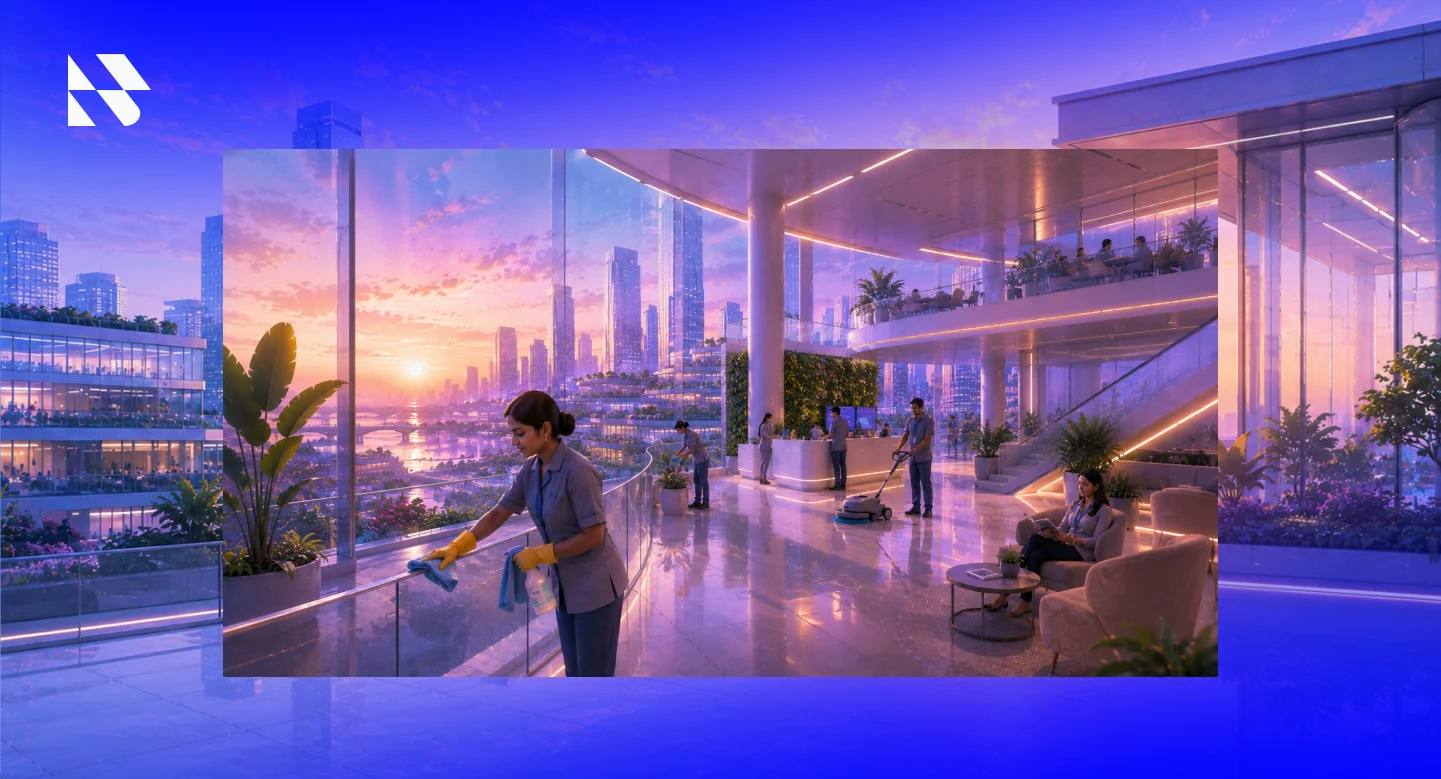
When you walk into a corporate office, the first things you notice are the spotless floors, the pleasant fragrance in the air, a well-managed reception desk, and a neatly organized cafeteria. These elements are not accidental. They are the result of meticulously planned and executed soft services in facility management.
Soft services in facility management refer to the variable, people-centric functions that enhance the comfort, hygiene, safety, and overall aesthetic appeal of a workplace. Unlike structural or mechanical maintenance, these services directly impact human experience and can be scaled up or down based on organizational needs.
As organizations adapt to hybrid work models, employers prioritize cleanliness, security, and hospitality to draw employees back to the office. According to market data from Mordor Intelligence, the soft FM sector is expanding rapidly, growing at a 6.71% CAGR through 2030. For admin heads, HR leaders, and facility managers across India, understanding and optimizing these services is critical to sustaining workplace productivity and compliance.
Soft FM vs Hard FM: Understanding the Difference
Facility management is broadly categorized into two streams: Hard FM and Soft FM. While they work in tandem to keep a building operational, their focus areas, execution styles, and management requirements differ significantly.
- Hard FM Services: These relate to the physical structure and core infrastructure of the building. They are legally required, asset-heavy, and directly tied to building safety and continuity. Examples include HVAC maintenance, plumbing, electrical grid management, and fire safety systems.
- Soft FM Services: These focus on the environment inside the building and the comfort of its occupants. They are human-centric, highly visible, and influence daily employee well-being and corporate hygiene.
The table below outlines how soft services different from hard services across key operational parameters:
| Operational Parameter | Soft Services (Soft FM) | Hard Services (Hard FM) |
| Primary Focus | Human comfort, hygiene, workspace aesthetics, and daily well-being. | Building infrastructure, asset health, and structural safety. |
| Nature of Service | Variable, customizable, and highly dependent on human labor. | Fixed, mechanical, technical, and asset-driven. |
| Core Examples | Housekeeping, corporate janitorial work, waste management, pest control, reception. | HVAC maintenance, electrical distribution, plumbing, fire fighting systems. |
| Impact Frequency | Felt every minute by employees through touchpoints and cleanliness. | Felt when systems fail or during scheduled preventive maintenance shutdowns. |
| Regulatory Drivers | Workplace hygiene standards, environmental waste disposal norms, labor compliance. | National Building Code (NBC), pollution control board norms, structural safety laws. |
The Full Scope of Soft Services in Facility Management
For corporate India, soft services represent the operational backbone of the daily workplace experience. A comprehensive soft FM strategy encompasses several specialized service lines, each requiring distinct training, protocols, and quality standards.
1. Housekeeping & Janitorial Services
Housekeeping services in India facility management form the largest component of soft FM. It goes beyond basic sweeping and mopping. Janitorial services corporate India demands involve structured color-coded cleaning protocols to prevent cross-contamination, high-frequency touchpoint sanitization, and specialized floor care. Professional housekeeping in hospitality facilities ensures that work zones, meeting rooms, and common corridors remain pristine throughout operating hours without disrupting business activities.
2. Waste Management & Segregation
Modern corporate campuses generate diverse waste streams, including dry waste, wet waste, electronic waste (e-waste), and hazardous materials. Effective waste management involves systematic collection, segregation at source, storage, and safe disposal in accordance with local municipal laws. Proper segregation helps organizations reduce their landfill footprint and meet local environmental compliance goals.
3. Washroom Hygiene & Sanitation
Workplace hygiene services India focus heavily on washroom management. Maintaining a sterile, odor-free, and fully stocked washroom is critical for employee health and preventing workplace infections. This service includes deep cleaning schedules, automated air freshener management, and the continuous replenishment of consumables like hand soaps, paper towels, and sanitizers.
4. Pest Control
A pest-free environment is essential for health, safety, and brand reputation. Professional soft services include proactive and reactive pest management solutions. This covers cockroach gel treatments, rodent control systems, termite management, and mosquito eradication. All treatments must use approved, non-toxic chemicals that do not compromise indoor air quality or occupant health.
5. Reception & Front Office Support
The reception desk is the face of an organization. Front office support as a soft service ensures that visitor management, call routing, courier handling, and access card issuance are managed professionally. Trained front-office executives set the tone for visitor hospitality and support security desk protocols during peak entry and exit hours.
6. Pantry & Cafeteria Support
Food and beverage zones require strict hygiene controls. Pantry and cafeteria support services include managing food serving lines, maintaining coffee vending stations, cleaning kitchen equipment, and clearing cafeteria tables promptly. Staff trained in food safety protocols ensure that dining spaces remain hygienic and free from pests.
7. Landscaping & Horticulture
The external environment of a corporate facility matters as much as the interior. Landscaping and horticulture services involve the upkeep of lawns, indoor plants, vertical gardens, and peripheral green zones. Regular watering, pruning, soil enrichment, and seasonal plantation enhance the aesthetic appeal of the corporate campus and contribute to better ambient air quality.
8. Facade Cleaning
Glass facades on modern corporate buildings accumulate dust, soot, and mineral stains due to urban pollution. Facade cleaning is a specialized soft service that uses trained professionals, heavy-duty safety harnesses, cradles, and specialized cleaning agents to maintain the exterior glass surfaces of high-rise structures safely and efficiently.
Why Soft Services Matter for Employee Experience and Productivity
The environment an employee works in directly affects their mental clarity, morale, and physical health. Investing in high-quality soft services yields tangible business returns by transforming the workplace into a strategic asset.
- Reduces Absenteeism: Regular sanitization of work surfaces, deep cleaning of carpets, and precise washroom hygiene significantly lower the transmission of viruses and bacteria, leading to fewer sick leaves.
- Enhances Brand Perception: A clean, organized facility reflects corporate discipline. When clients, auditors, or potential investors visit, the state of the physical environment acts as a silent ambassador for the company’s standards.
- Boosts Workforce Productivity: Employees perform better when they do not have to worry about untidy workstations, slow cafeteria lines, or poor washroom hygiene. Clean workspaces foster focus and reduce daily operational friction.
- Supports Talent Retention: In a hybrid working world, the office must offer an experience that working from home cannot match. High standards of hospitality, cleanliness, and safety make employees feel valued and supported.
The ESG and Sustainability Angle in Soft FM
Soft services play a quiet yet significant role in achieving corporate Environmental, Social, and Governance (ESG) targets. Because these services handle consumables, water, and waste on a daily basis, minor operational changes can lead to substantial sustainability gains.
Green Cleaning Practices
Transitioning to biodegradable, chemical-free cleaning agents protects the health of both the housekeeping staff and office occupants. It reduces the release of volatile organic compounds (VOCs) into the indoor air and prevents harmful chemicals from entering municipal water systems.
Water Conservation and Waste Audits
Implementing waterless urinals, sensor-based taps, and microfibre mopping systems (which require up to 70% less water than traditional mops) directly supports corporate water conservation goals. Similarly, conducting regular waste audits ensures that recyclable plastics, papers, and e-waste bypass landfills entirely and reach authorized recycling centers.
How Technology Transforms Soft Service Delivery
The traditional view of soft services as a purely manual, low-tech operation is changing rapidly. Modern facility management relies heavily on data and digital tracking to maintain high service levels consistently.
QR-Based Task Tracking
Instead of paper checklists stuck behind washroom doors, facilities now utilize QR-code-based logging systems. Housekeeping staff scan a QR code upon completing a cleaning cycle, updating the central database in real time. If an area requires attention, employees can scan the same code to log a ticket immediately.
AI Audit Tools and Sensor-Based Alerts
IoT sensors placed in washrooms can monitor footfall traffic and ammonia levels, alerting the janitorial team to clean the area based on actual usage rather than rigid hourly schedules. AI-powered audit tools allow facility managers to capture geo-tagged, time-stamped images of work areas, ensuring strict quality control across large corporate campuses.
Operational Scale and Digitization
Managing large-scale corporate spaces requires sophisticated operational infrastructure. For instance, Bluspring manages soft services across 250 Mn+ sq ft across India, demonstrating the scale at which modern facility operations function. To manage large field teams efficiently, systems like the Hamara HR platform digitise deployment and compliance for a 91,000+ workforce, ensuring that attendance, regulatory compliance, and shift allocations are tracked transparently without human error.
Frequently Asked Questions (FAQ)
What is the main difference between soft and hard FM services?
Soft FM services focus on human comfort, cleanliness, and workplace hygiene (such as housekeeping, pest control, and reception). Hard FM services deal with the physical structure and mechanical systems of the building (such as HVAC, electrical grids, and plumbing repairs).
How do soft services improve workplace safety?
Soft services improve safety by ensuring floors are dry and slip-free, high-touch surfaces are sanitized to prevent infection spread, emergency exits remain clear of waste, and specialized teams clean exterior glass facades using strict industrial safety gear.
Can soft services assist in corporate sustainability goals?
Yes. Soft services contribute directly to sustainability by managing dry and wet waste segregation at source, utilizing eco-certified green cleaning chemicals, reducing water consumption through advanced mopping technologies, and ensuring ethical e-waste disposal.
Why are housekeeping services considered a variable soft service?
Housekeeping is variable because its scope can alter based on immediate needs. An organization can increase housekeeping strength during a corporate event, scale down staff during hybrid work periods, or modify cleaning frequencies based on building occupancy data.
What technology is used to monitor soft service performance?
Performance is monitored using digital platforms that track attendance and compliance, QR codes for real-time restroom and workstation cleaning logs, and IoT demand-driven sensors that alert staff based on facility footfall rather than fixed schedules.
Keep every workplace clean, compliant and comfortable
Managing distributed facilities while maintaining uniform standards of hygiene, compliance, and experience requires an experienced partner. Discover how structured operational processes can elevate your daily workplace environment.