What’s really disrupting productivity in your plant?
Rising complexity. Unplanned downtime. Coordination gaps. Pressure across safety, quality, cost, delivery, and output.
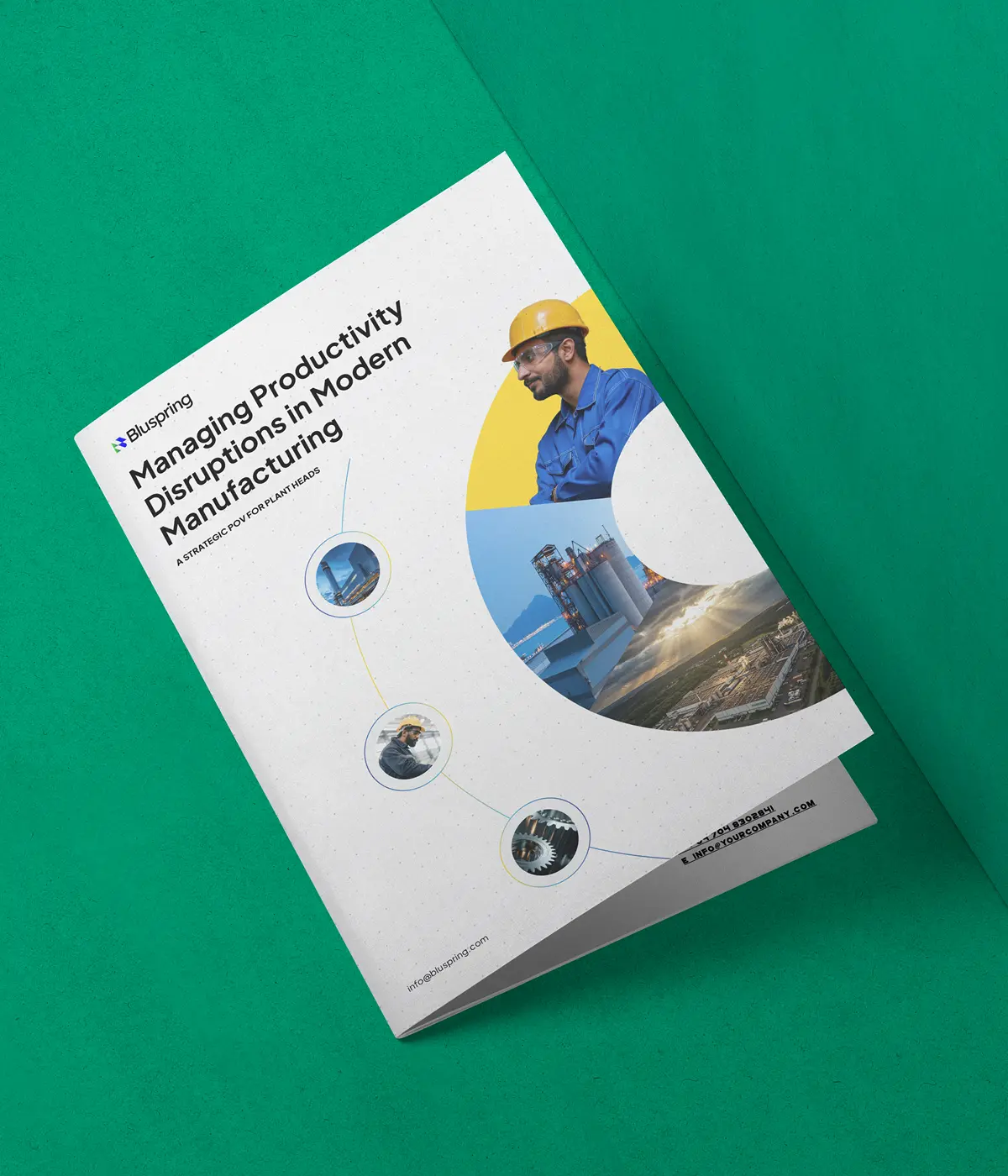
Download the Insights Report
The Problem
Productivity is Getting Harder to Sustain
As manufacturing scales, stable operations become harder to maintain.
Performance depends on equipment, workforce, utilities, safety, and materials working together. Misalignment leads to system failures that disrupt safety, quality, cost, delivery, and output simultaneously.
The Shift
Move from Reactive Troubleshooting to Systems-Driven Operations
Plants are moving beyond firefighting disruptions, stabilizing performance by managing operations as interconnected systems that prevent breakdowns and sustain output.
Aligned Operations Across Functions
Maintenance, utilities, safety, workforce, security, and facility services operate in sync to support continuous production.
Preventive & Predictive Maintenance
Stronger preventive cycles and predictive systems help identify failures before they disrupt production.
Operational Visibility & Faster Decisions
Structured monitoring and real-time insights improve response time and reduce escalation cycles.
The Impact
What You Gain
Plants adopting a systems-driven approach achieve stronger control, improved efficiency, and more stable performance across operations.
PLANT OPERATIONS
Reduced Downtime & Output Loss
Stronger coordination and preventive systems minimize disruptions and improve equipment effectiveness.
PLANT OPERATIONS
Improved Safety & Compliance
Better alignment across systems reduces incidents and strengthens compliance outcomes.
PLANT OPERATIONS
Consistent Quality Output
Stabilized processes reduce variability, defects, and rework.
PLANT OPERATIONS
Better Cost Control
Improved visibility into energy, materials, and equipment performance helps manage operating costs.
CASE STUDY
MANUFACTURING — CHEMICAL PLANT, GUJARAT
3,500+ personnel managed across 7 integrated facility services for a large educational campus since 2000
Integrated housekeeping, waste management, security, food & beverage, patient care, and ancillary operations under a unified service model
Streamlined coordination across multiple departments to improve operational efficiency and campus uptime
Enabled centralized visibility and service accountability across large-scale daily operations
We use analytics and essential cookies to run the website and understand how visitors interact with it. By continuing, you agree to our use of cookies.